

Later today, I fly from Jakarta to Singapore. Yesterday, we rode the subway system. We were told that the Jakarta trains are old Japanese Subway trains. They have been repainted and they were nice and clean and the system was more comfortable and cleaner than the New York City Subway system. Outside of one of the Jakarta stations, I took this photo.
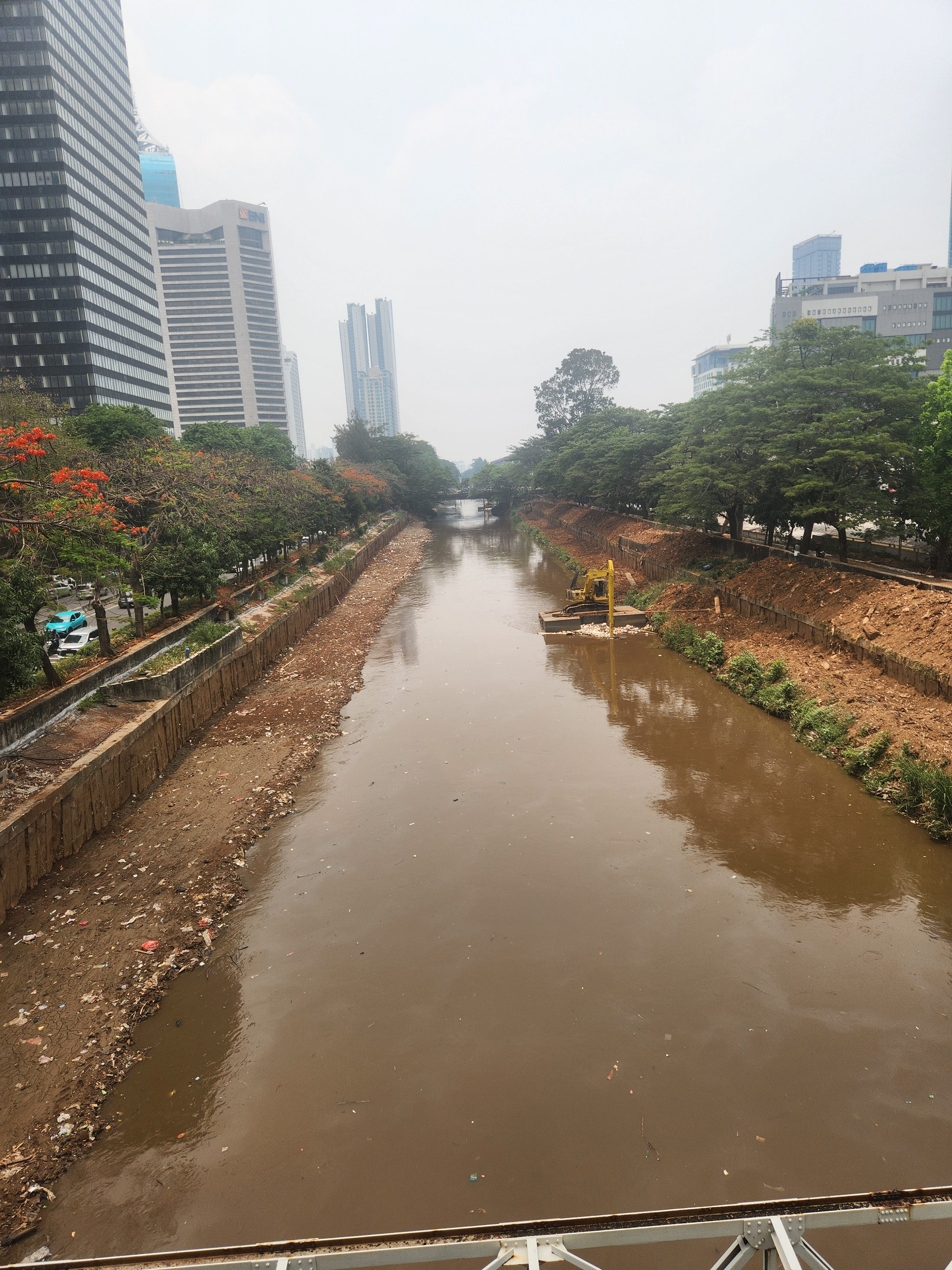
You can see fancy buildings next to this canal. You can also see that there are no biking or jogging trails near this canal. I fed this photo to Chat GPT and the AI said the following.
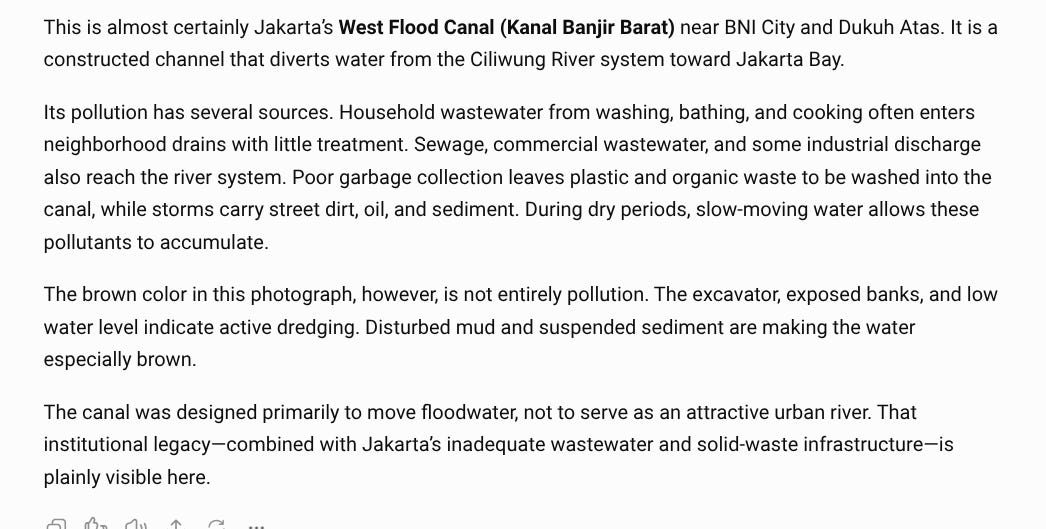
So, this a classic urban Tragedy of the Commons issue. U.S cities have faced this challenge for decades and in recent years have made great progress cleaning up their water. Joe Shapiro of UC Berkeley has been one of the leading economists studying the impact of the U.S Clean Water Act and the subsidies it introduces to encourage cities to invest more in water protection.
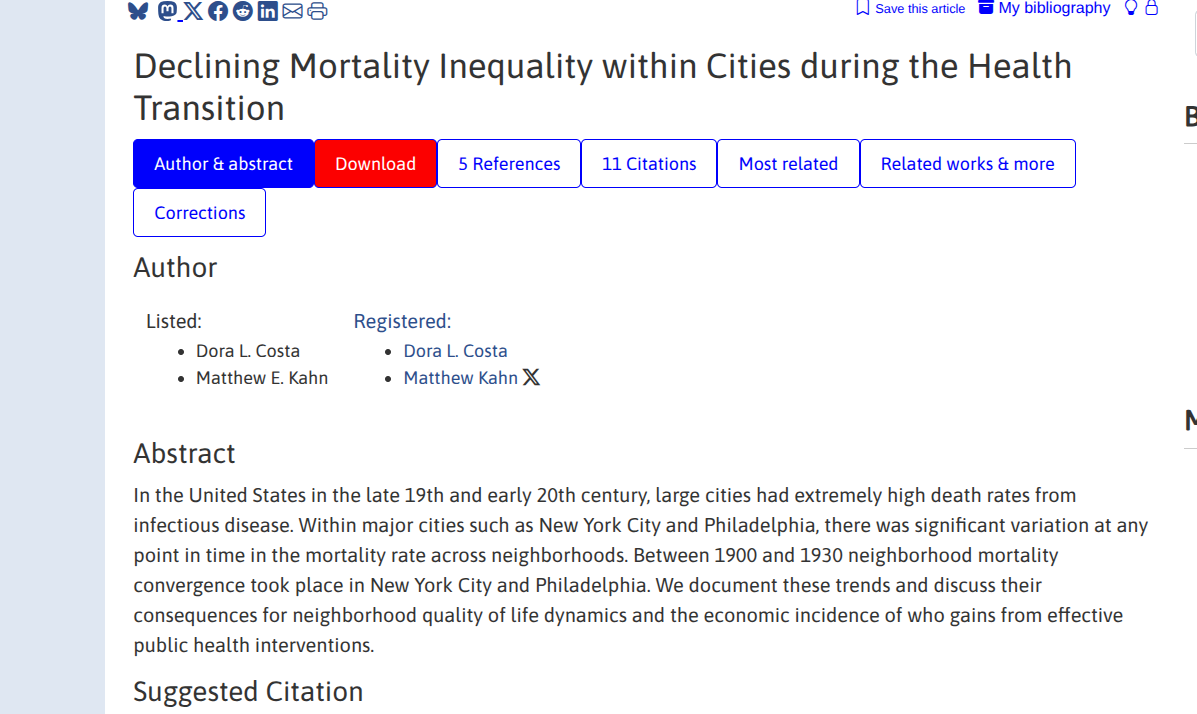
David Cutler and Grant Miller wrote a very interesting paper claiming that when U.S cities started to issue municipal bonds in the early 1920s and 1930s that this provided the funds to build costly water treatment plants. In this 2015 paper, Dora Costa and I explore the implications for Mortality within major U.S cities.
As Jakarta grows richer, I expect that local leaders will learn from Singapore and other richer cities in Asia about the “green city” benefits of investing in garbage disposal and using basic credible fines to deter illegal waste disposal.
Improvements in information technology can be implemented to pinpoint polluters and to identify areas where current infrastructure isn’t performing well. Garbage pick up could be privatized and competition between garbage disposers could play a role in greening the city.
In cities such as Boston and Chicago and NYC, people love to walk along clean water and new businesses pop up there as people exercise and play in the green consumer city.
If I visit Jakarta in 2036, I expect this water to be much cleaner.
A final point I want to raise here pertains to imagination . Jakarta’s investment in reducing water pollution and better handling garbage and emissions depends on the people’s imagination and their ability to foresee how much nicer their City could be if the water pollution issue is directly addressed.
Now, there is a synergy here between air and water pollution. If Jakarta is hot, humid and the air pollution is bad, people will try to spend very little time outside and the garbage and pollution in the water will bug them less because they are not outside like in my city of Los Angeles. But, if the air quality gets better then more people will be spending more time outside even when they aren’t commuting and the value of clean water in the city will rise even more.
Air quality would be an additional benefitciary of congestion taxes as congested traffic produces more emissions per mile traveled.
Jakarta did require small motor vehicles to switch to 4 cycle from two cycle whihc reduces polllution.