

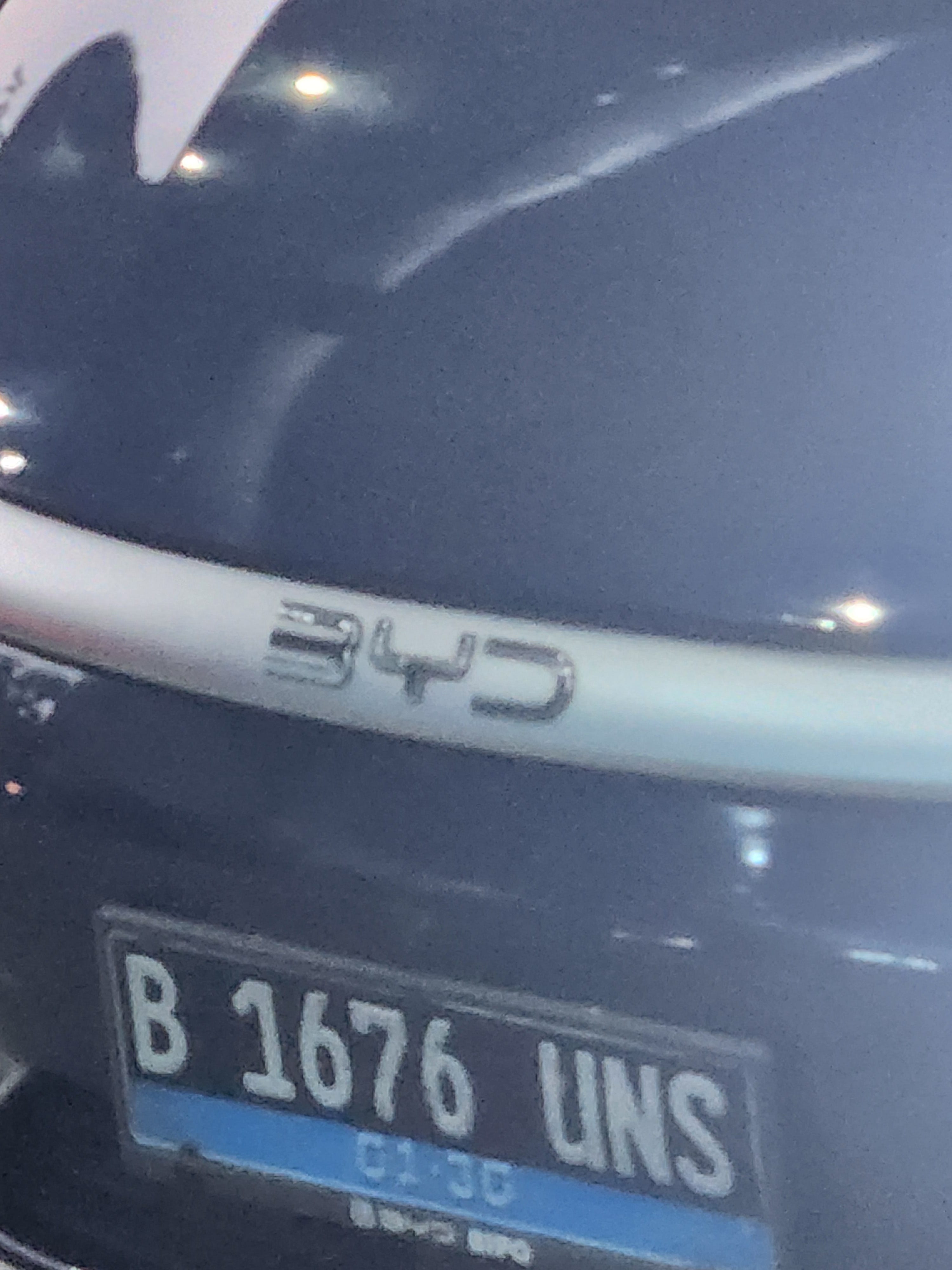
Last night in Jakarta, I took my first ride in a BYD vehicle. As the owner of a Tesla Y, I noticed some similarities between my car and this car.
Gemini reports the following facts:
“In 2025, the geographic divergence between the world’s two clean-tech titans underscored how sharply industrial policy and trade barriers partition the global electric vehicle market. In the United States, Tesla delivered approximately 589,000 vehicles (representing over 35% of its roughly 1.64 million global deliveries), while BYD sold zero passenger cars, kept entirely out of the consumer market by 100% tariffs and national security restrictions on Chinese software (selling only a few hundred commercial electric buses and trucks assembled at its Lancaster, California facility). In China, however, the tables turned dramatically: BYD delivered roughly 3.55 million vehicles domestically (out of its 4.60 million global total, with its remaining 1.05 million units exported overseas), dwarfing Tesla’s China retail sales of approximately 626,000 vehicles. While Tesla still manages to operate as a truly bilateral player—selling roughly balanced volumes of around 600,000 units in both the U.S. and China—BYD dominates its home turf by nearly six to one over Tesla while using Southeast Asia, Europe, and Latin America, rather than North America, as its export frontier.”
From my ride last night, I felt that I was sitting in a Tesla as I rode in the BYD. Did BYD reverse engineer their vehicle’s design based on Musk’s design?
NOW, I want to make a new point. While Jakarta is a poor city, it has a plan to completely phase out fossil fuel buses by 2030. Here is a bus I saw in the City.
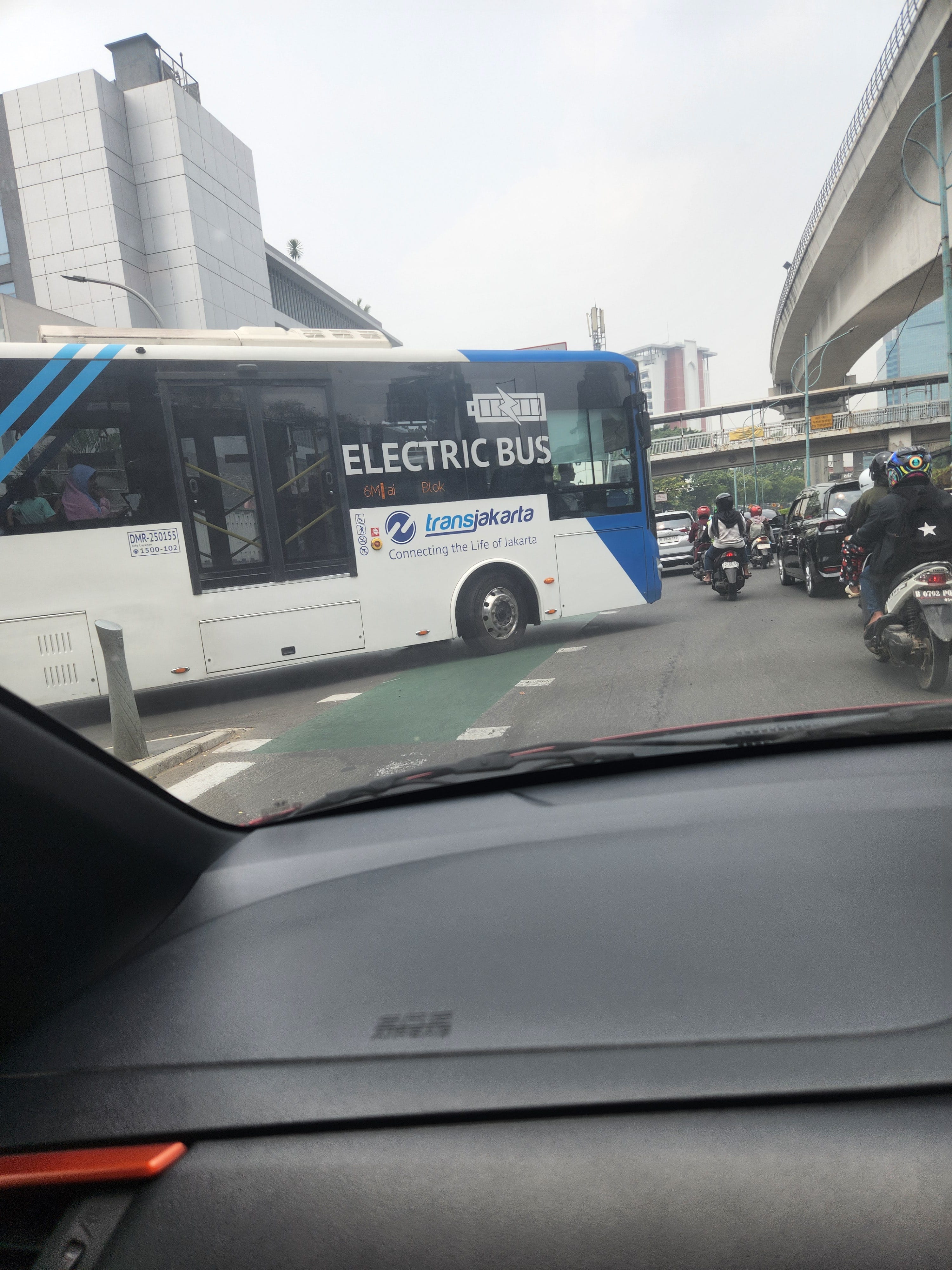
Jakarta’s bus fleet features roughly 4000 buses and by 2036 it hopes to have 10,000 buses on the roads. Right now EV buses are only 5% of the fleet and among these BYD has a 20% share of the EV bus market in Jakarta. We were told that Jakarta will rely on Chinese imports from BYD and phase out buying EV buses from Japan.
How can Jakarta afford to buy EV buses? These buses tend to cost roughly $1 million in the United States. We were told that Jakarta is buying Chinese EV buses for $200,000. This is a low enough market price to trigger demand.
How can the U.S not be gaining from Chinese EV exports? Both U.S tariffs and the U.S Buy America Act limit the gains to trade. I explored this point in this paper;
Li, Shanjun, Matthew E. Kahn, and Jerry Nickelsburg. "Public transit bus procurement: The role of energy prices, regulation and federal subsidies." Journal of Urban Economics 87 (2015): 57-71.
Let me return to Musk and Tesla again. If BYD “studied” Musk’s Tesla and designed both the Tesla and the BYD EV buses based on this design, then Tesla has played a role improving air quality in Jakarta.
A major polluter of the air in Jakarta is the transport sector with motorbikes, old cars, buses and diesel trucks polluting away as the stop and go. EV buses help to clean the air a little bit and reduce the pollution exposure for riders on the bus.
Undoubtedly, there were spillovers, but crediting BYD’s success to Tesla dramatically oversimplifies the story.
BYD is another example of that classic CEO origin story: A dreamer wants to build something, goes abroad to buy from established players, they laugh him out the door, he returns home, more determined than ever, and finds a way to destroy them.
Just as the Russians spat on Musk when he tried to buy an ICBM, Wang Chuanfu tried to buy Japanese battery-making equipment only to be laughed out the door as he could not afford it.
Upon his return, Wang Chuanfu asked his team…why don’t we build batteries without these expensive machines? They figured it out and built a battery business that pushed the Japanese out of the market almost overnight.
But Chuanfu’s vision was never to make batteries…he wanted to make EVs. To that end, he gambled his company by buying a failing state-owned carmaker circa 2002, years before the first Tesla hit the roads.
That, and BYD relies on quite a different battery chemistry and cell form factor. BYD is more akin to a Chinese parallel giant than a carbon copy of Tesla.