
Optimistic Econ 101 Lessons For Adapting to Drought in Tehran, Iran

A historian at Oxford University has written a New York Times piece about water shortages in Tehran, Iran that my mother will read. His piece does not use the word “prices”. I will return to this point below!
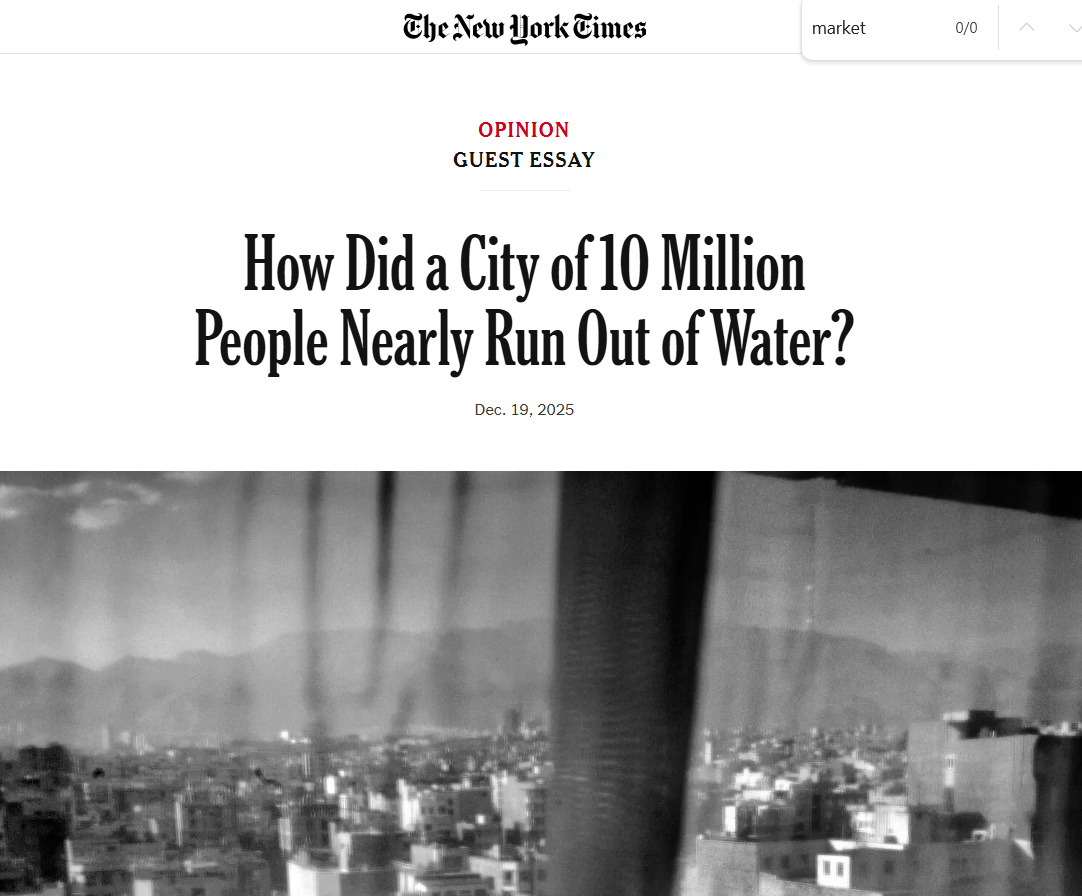
Peter Frankopan doesn’t appear to have ever published a well cited paper on natural resource consumption. But, let’s proceed and take a look at his economic logic.
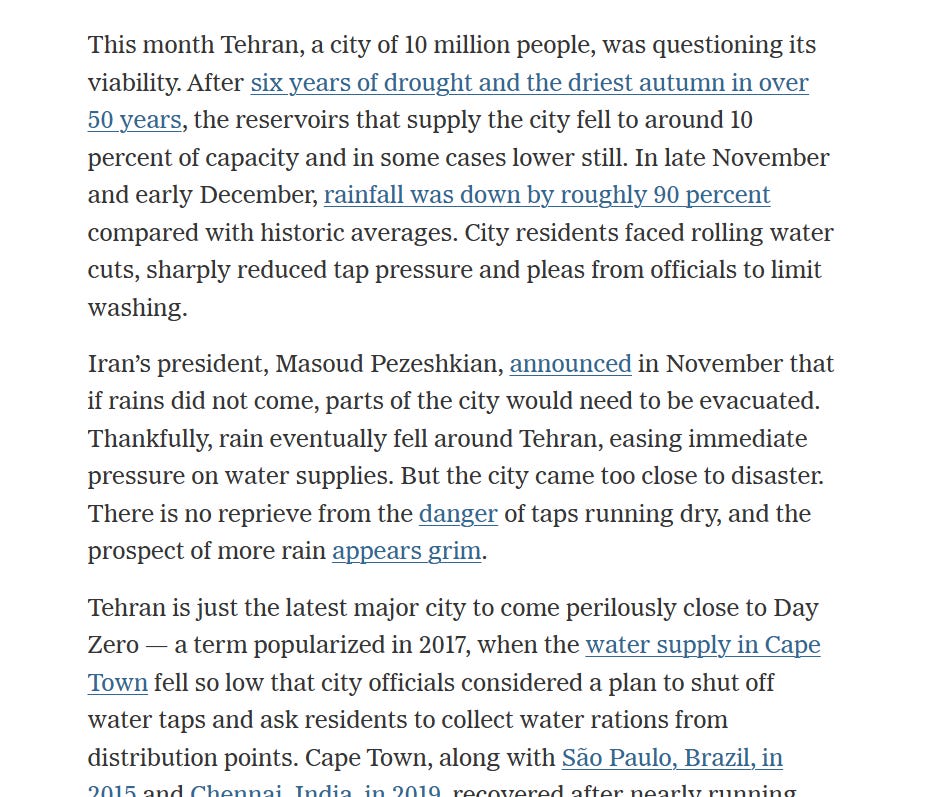
So, the author is going to tell a story about rising aggregate demand as the megacity’s population grows and local people and firms consume increasingly scarce water.
The piece features some interesting sections.
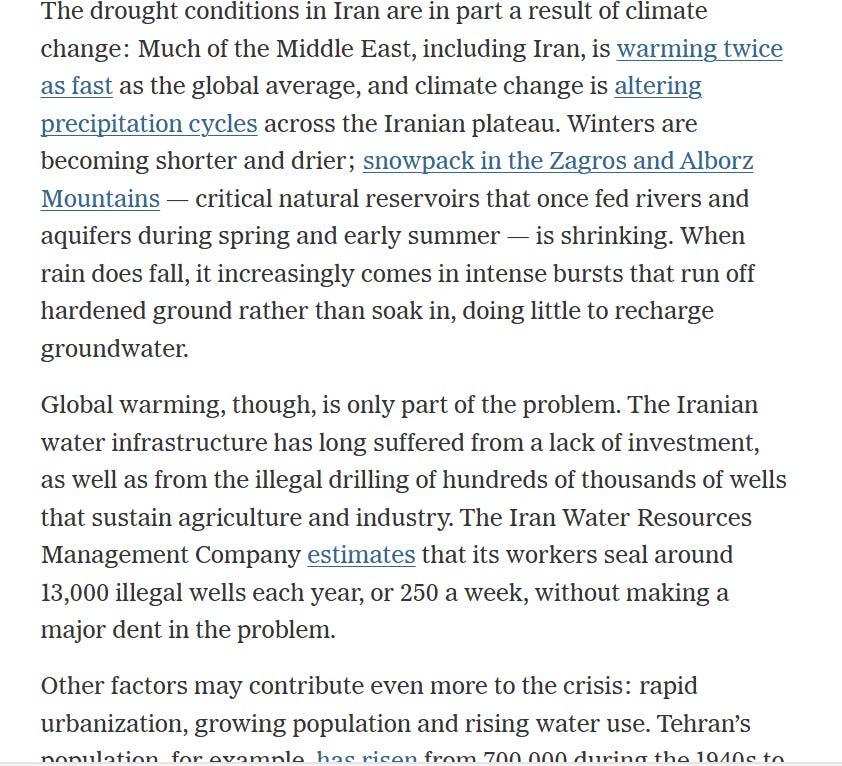
These illegal wells pose an interesting issue that can be addressed using drone flyovers and credible punishments of those who are caught.
The article does take a historical twist as it discusses relocating the capital city in order to adapt.
Permit me to propose a cheaper solution. Raise Water Prices!!! I talked to Grok and Grok created the following facts for me about water prices per-gallon in Tehran.
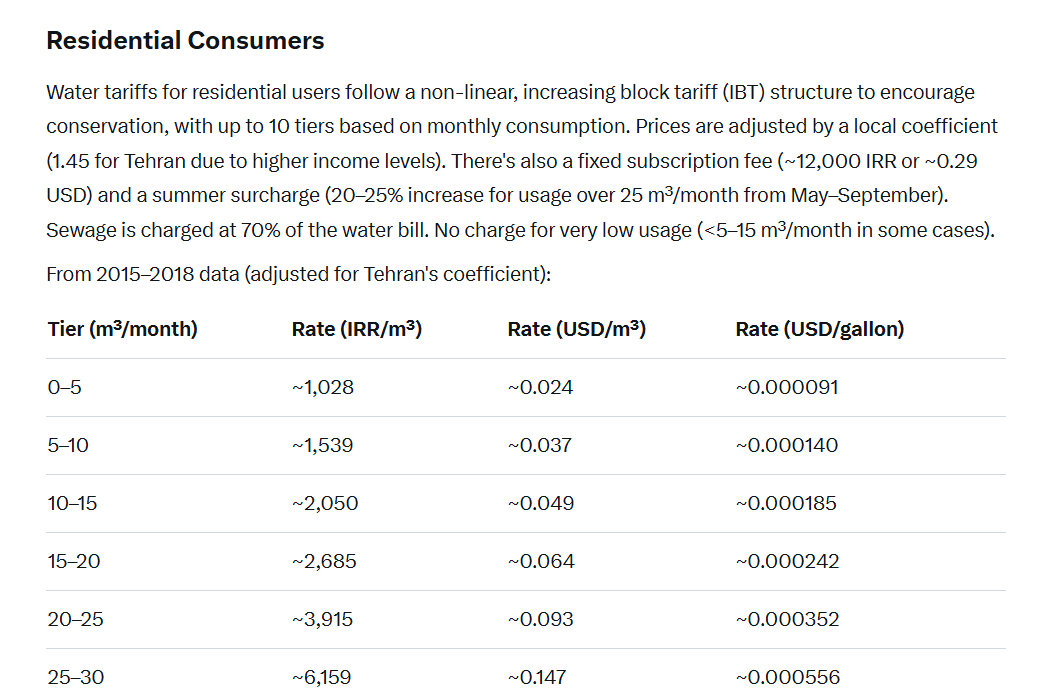
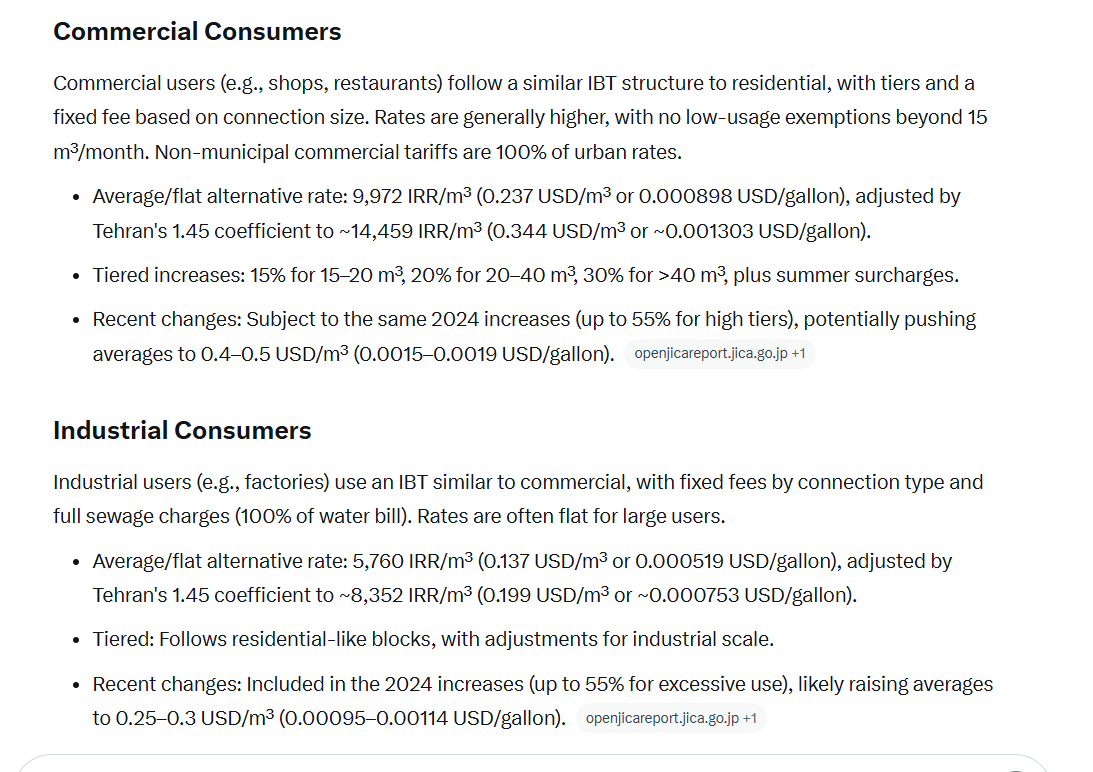
These extremely low prices eliminate the incentive to conserve on water in the short run or to install water efficient durables or to seek out economic activities that conserve on water. The market price system in Tehran is not playing its central Hayek role of sending out scarcity signals. Adaptation does not occur when prices equal zero.
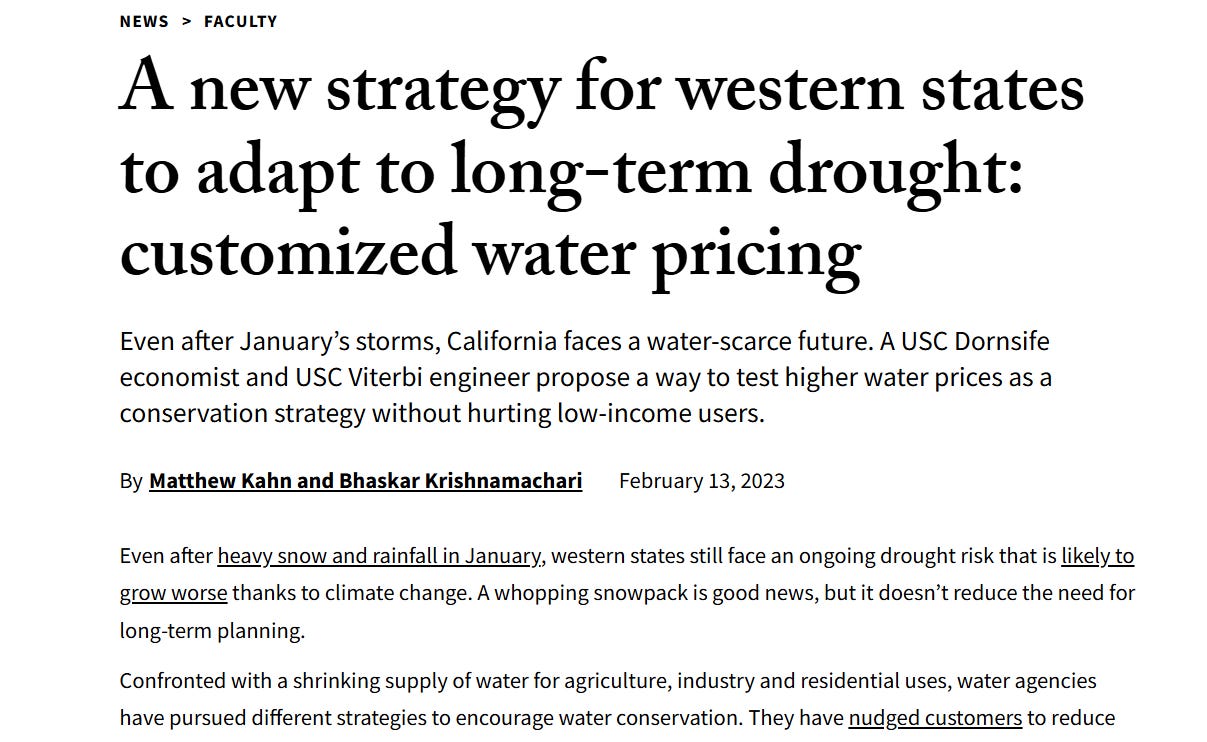
Of course, interesting political economy issues arise if the State raises water prices and allows them to reflect scarcity but the State could educate the public about the benefits of allowing the price system to operate. If the people have the “property right” to low prices, then an alternative approach is to roll in dynamic water pricing as we discuss in this proposal.
The Oxford Historian is telling a classic “limits to growth” story that if Tehran is home to 10 million people and if each person consumes 1000 gallons a year then 10 billion gallons of water is aggregate demand and this flow demand will eventually “bankrupt” the region’s water supply.
When I taught at UCLA’s Institute of the Environment, I routinely encouraged this arithmetic logic arguing that cities will collapse because of rising demand. None of my colleagues appreciated basic free market environmentalism logic that if prices are allowed to reflect scarcity then prices will rise and supply and demand side adaptation will unfold and the economy will smoothly adapt to the anticipated challenge.
I no longer teach at UCLA because of this intellectual dynamic.
For those who want to learn more about the role of markets in fueling adaptation, read our NBER paper;
Anderson, Sarah E., Terry L. Anderson, Alice C. Hill, Matthew E. Kahn, Howard Kunreuther, Gary D. Libecap, Hari Mantripragada, Pierre Mérel, Andrew J. Plantinga, and V. Kerry Smith. "The critical role of markets in climate change adaptation." Climate Change Economics 10, no. 01 (2019): 1950003.
A very interesting article. I live in southern Arizona and ground water usage and ownership are hotbutton topics. Newcomers to the area fail to understand the limitations of this critical resource. Just the rambling thoughts of an old hermit