

I have been in Jakarta and Singapore for the last two weeks. Siqi Zheng and I are here doing research for our book manuscript that is under contract with Harvard University Press. Our book is a type of sequel to Ed Glaeser’s “Triumph of the City”. Our book focuses on the urban economics of Asia’s developed and developing cities.
As I walk around, I am noting puzzles. One puzzle is that relatively poor and less educated Jakarta is electrifying its bus fleet at a faster rate than rich and educated Singapore.
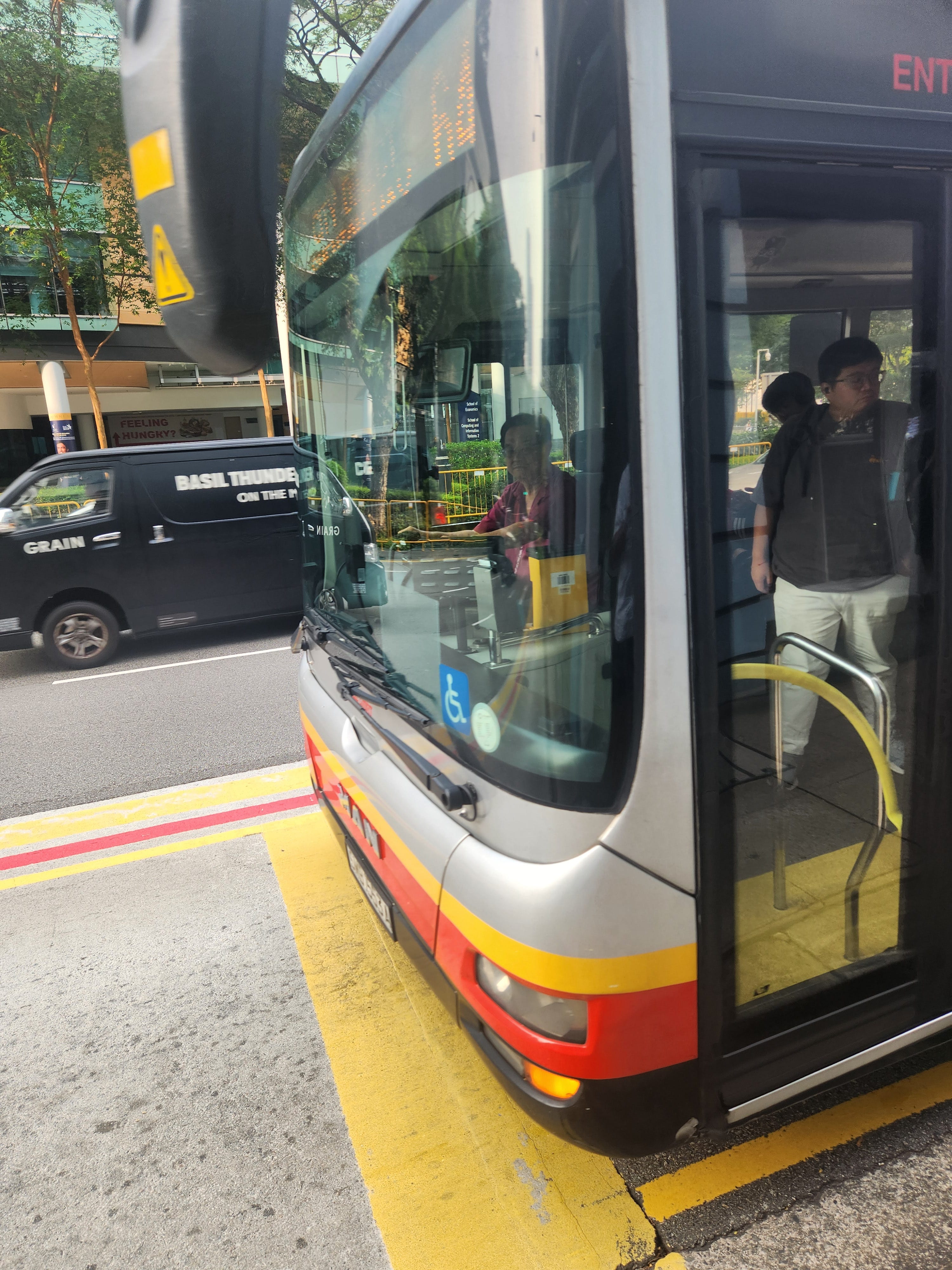
Here is a photo of a natural gas bus in Singapore.
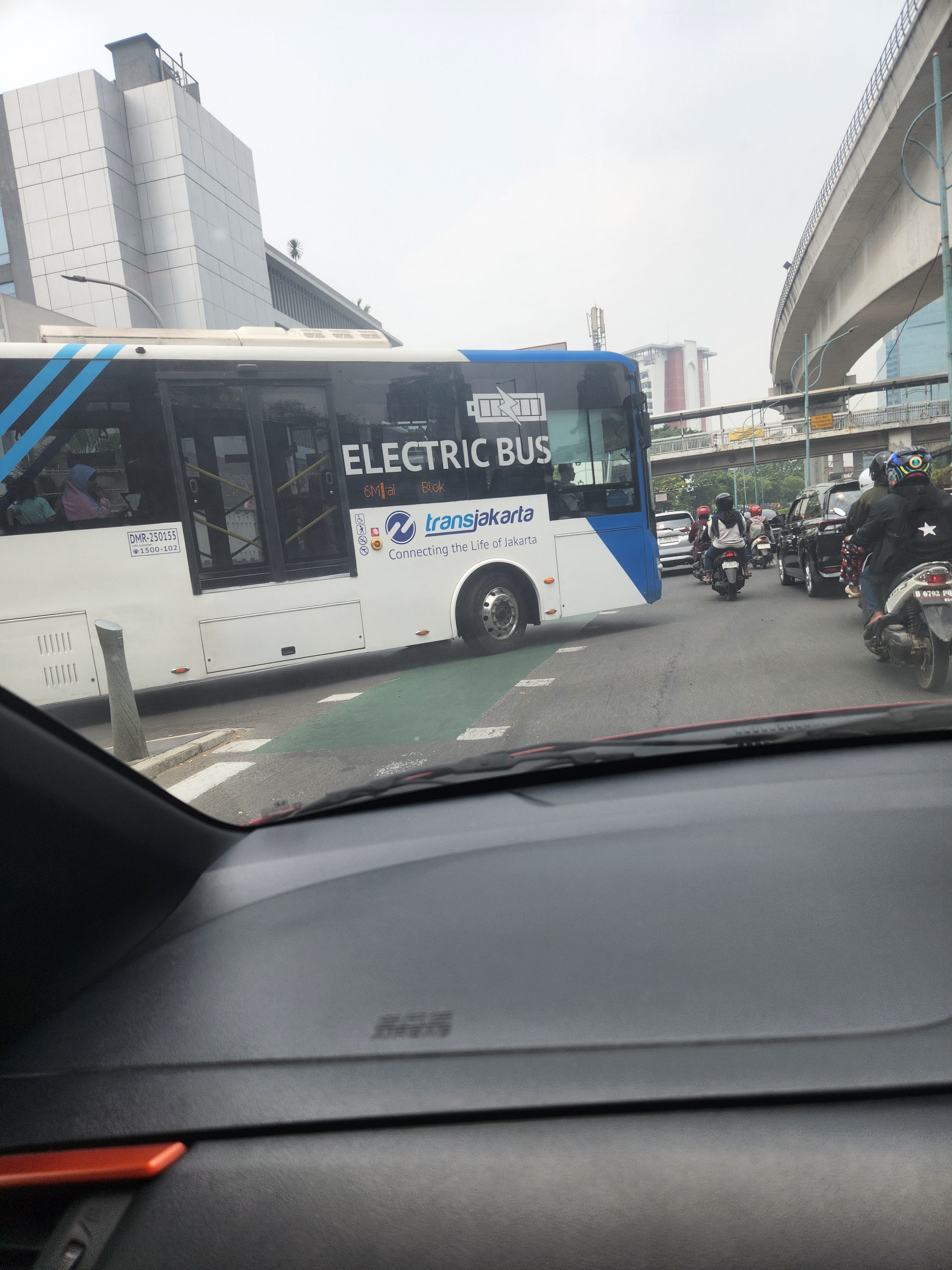
Here is a photo of an EV bus in Jakarta.
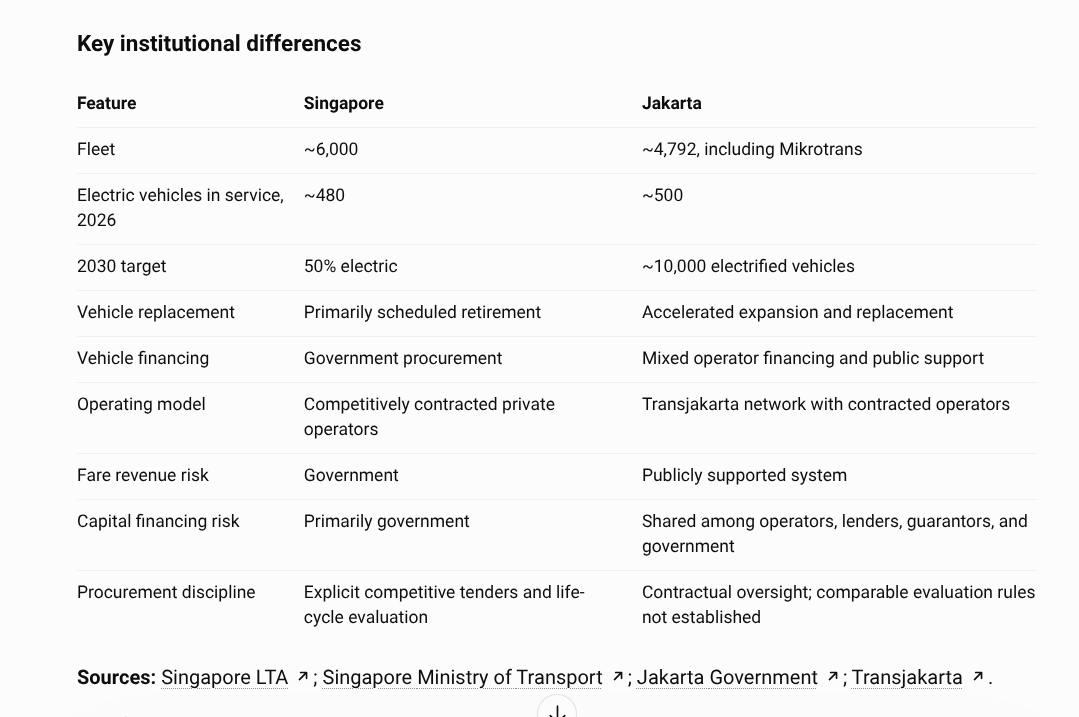
Here are some facts that Chat GPT put together for me.
In my past work in the United States, I have found that richer and more educated people and places are cleaner and use and operate cleaner capital equipment. Here are some papers I have written.
Robert Huang & Matthew E. Kahn, 2024. "Household carbon dioxide emissions Engel Curve dynamics," Contemporary Economic Policy, Western Economic Association International, vol. 42(3), pages 396-415, July.
Huang, Robert & Kahn, Matthew E., 2023. "An economic analysis of United States public transit carbon emissions dynamics," Regional Science and Urban Economics, Elsevier, vol. 103(C).
Li, Shanjun & Kahn, Matthew E. & Nickelsburg, Jerry, 2015. "Public transit bus procurement: The role of energy prices, regulation and federal subsidies," Journal of Urban Economics, Elsevier, vol. 87(C), pages 57-71.
Matthew E. Kahn, 2002. "Demographic change and the demand for environmental regulation," Journal of Policy Analysis and Management, John Wiley & Sons, Ltd., vol. 21(1), pages 45-62.
The puzzle; given that Jakarta is poorer and less educated than Singapore ; why are they making a Big Green EV bus push?
#1 Jakarta’s PM2.5 levels are higher and dirty buses do contribute to local air pollution.
#2 Singapore’s government is run more like a for profit business. In the U.S; transit agencies lose money. People want good public transit AND they want to pay a low price. The operating revenue is often much lower than the operating costs let alone if we factor in capital costs. I am guessing that the Singapore government provides incentives to the transit agency to run a profitable entity and this creates incentives for the transit authority to be prudent about the Bus Replacement decision.
Of course, a wise government will consider the air pollution benefits of substituting EV buses for CNG buses. In the U.S, researchers have documented that the Tesla can be a dirty car if the power generated to fuel the vehicle is produced using coal.
91% of Singapore’s power is generated by natural gas. This means that the CO2 benefits from substituting from natural gas CNG to EV are small. Singapore already has clean air and most of the pollution is due to haze imported from Malaysia and Singapore.
So, Singapore’s choice to not buy EVs can be explained through incentives and expectations of small marginal environmental gains.
Now, what I don’t know about Jakarta relates to “other people’s money”. BYD does sell Jakarta cheap EV buses but does Jakarta receive subsidies from their Federal government or international $ for doing so?